Plastering looks simple on YouTube.
In reality? It’s one of the easiest ways to ruin a wall if it’s done wrong.
As professional plasterers, we’re often called in to fix poor plastering jobs—and most of the problems come from the same avoidable mistakes.
In this post, I’ll break down the most common plastering mistakes homeowners make, why they happen, and how professionals like us at LA Plastering avoid them every time.
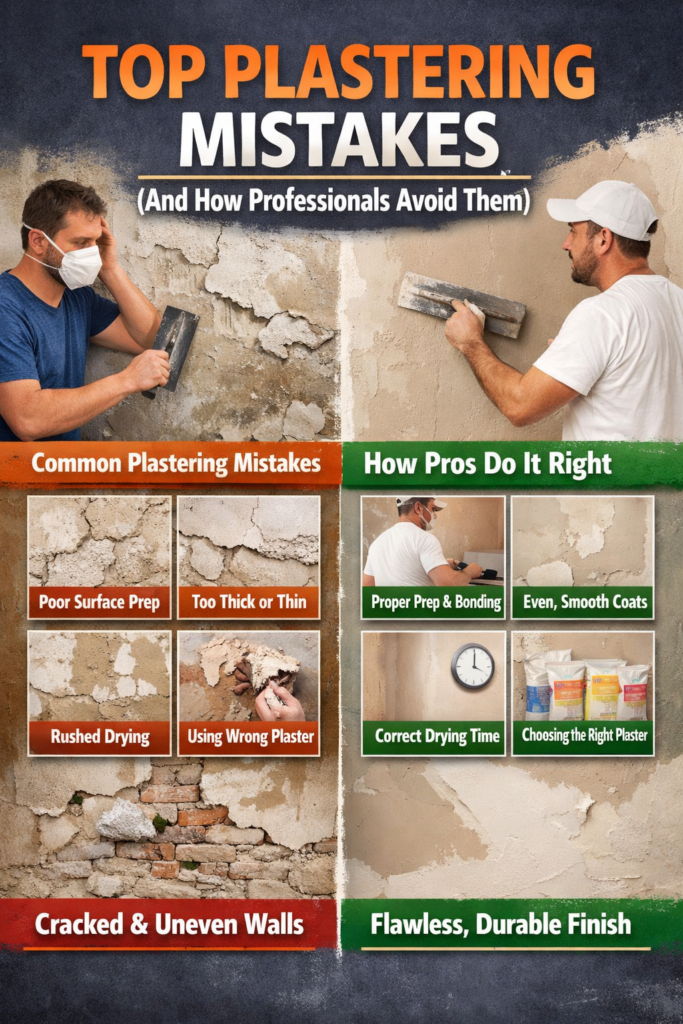
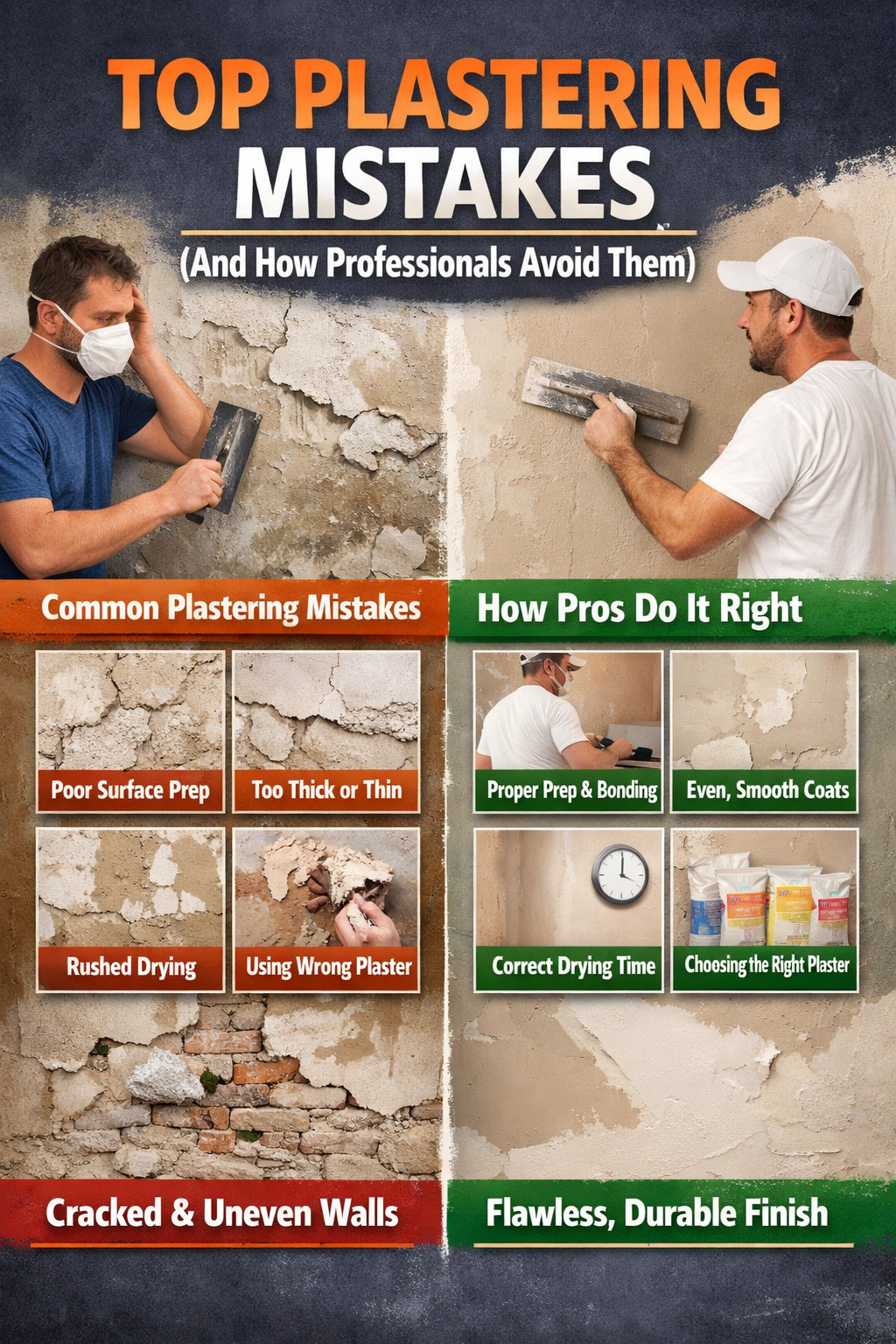
1. Poor Surface Preparation
This is the #1 plastering mistake — and the most expensive one to fix.
What goes wrong:
- Dusty or dirty walls
- Old paint not properly sealed
- Loose plaster left underneath
When plaster doesn’t bond properly, it cracks, bubbles, or falls away entirely.
How professionals avoid it:
- Thorough wall inspection before starting
- Removing loose material
- Applying the correct PVA or bonding agent
- Allowing proper tack time before plastering
👉 Preparation isn’t optional. It’s 50% of the job.
2. Applying Plaster Too Thick or Too Thin
Plaster has a sweet spot — and missing it causes major issues.
Common DIY problems:
- Plaster applied too thick → cracking during drying
- Plaster too thin → uneven finish and weak surface
What professionals do differently:
- Apply plaster in controlled, even coats
- Use the correct plaster type for the surface
- Work within manufacturer-recommended thickness levels
The result? Smooth walls that last for years.
3. Overworking the Plaster
This mistake usually comes from good intentions.
People keep trowelling because they want it “perfect”.
Why this is a problem:
- Brings excess water to the surface
- Causes dark patches and trowel marks
- Weakens the plaster as it dries
The professional approach:
- Timing each trowel stage precisely
- Knowing when to stop
- Letting the plaster set naturally
Sometimes, the best move is to leave it alone.
4. Not Allowing Proper Drying Time
Plaster isn’t paint — it doesn’t dry overnight.
What homeowners often do:
- Paint too soon
- Turn up heating excessively
- Use dehumidifiers incorrectly
This leads to:
- Cracking
- Flaking paint
- Trapped moisture
How professionals manage drying:
- Natural airflow over forced heat
- Correct drying times based on room conditions
- Advice on when it’s safe to decorate (usually 5–7 days)
5. Using the Wrong Type of Plaster
Not all plaster is the same.
Using the wrong product can completely compromise the finish.
Common mismatches:
- Multi-finish where bonding plaster is needed
- Skim coat over unstable backgrounds
- No moisture-resistant plaster in kitchens or bathrooms
Professional solution:
- Assessing wall condition first
- Choosing plaster based on:
- Surface type
- Room usage
- Moisture levels
This is where experience really matters.
6. Ignoring Small Cracks and Structural Issues
Plaster can’t fix everything.
If the wall is moving, the plaster will crack again — guaranteed.
DIY mistake:
Covering cracks without addressing the cause.
Professional fix:
- Identifying structural vs surface cracks
- Reinforcing problem areas
- Using scrim tape or specialist products where needed
This ensures cracks don’t return months later.
Why Professional Plastering Saves Money Long-Term
Many homeowners attempt plastering to save money.
But fixing mistakes often costs more than doing it right the first time.
Professional plastering delivers:
- Long-lasting smooth finishes
- Faster project completion
- Walls ready for decorating
- No costly rework
Need a Professional Plasterer You Can Trust?
At LA Plastering, we pride ourselves on:
- Flawless finishes
- Proper preparation
- Honest advice
- Clean, reliable workmanship
If you’re planning a plastering project or need a poor job fixed, get in touch today for expert help and a free quote.