If you’ve ever had plaster crack, debond, or dry too fast, the problem usually isn’t the plaster.
It’s the prep.
And when it comes to prep, two products dominate the conversation on UK sites:
SBR and PVA.
I’ve been plastering around Bournemouth, Poole, and Christchurch for years—new builds, renovations, damp coastal properties, you name it. I’ve used both extensively, and I can tell you this:
They are not interchangeable, and choosing the wrong one will cost you time, money, and reputation.
Let’s break it down properly.
What Is PVA?
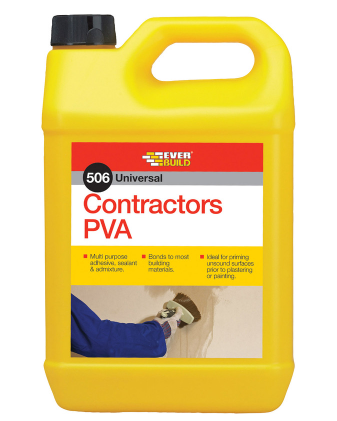
PVA (Polyvinyl Acetate) is the old-school bonding agent most plasterers learn with.
What PVA Does Well
- Seals dusty or porous backgrounds
- Slows suction on high-absorption surfaces
- Cheap and easy to find
- Simple to mix and apply
That’s why it’s still everywhere.
Typical Uses
- Plastering over old plaster
- Sealing dusty walls
- Light domestic prep work
How It’s Used
Most plasterers apply:
- First coat: 1:3 or 1:4 (PVA to water)
- Second coat: Stronger mix, often tacky before plastering
And yes—timing matters. Miss the tacky window and you’re in trouble.
The Big Problem With PVA
Here’s the part most people don’t talk about.
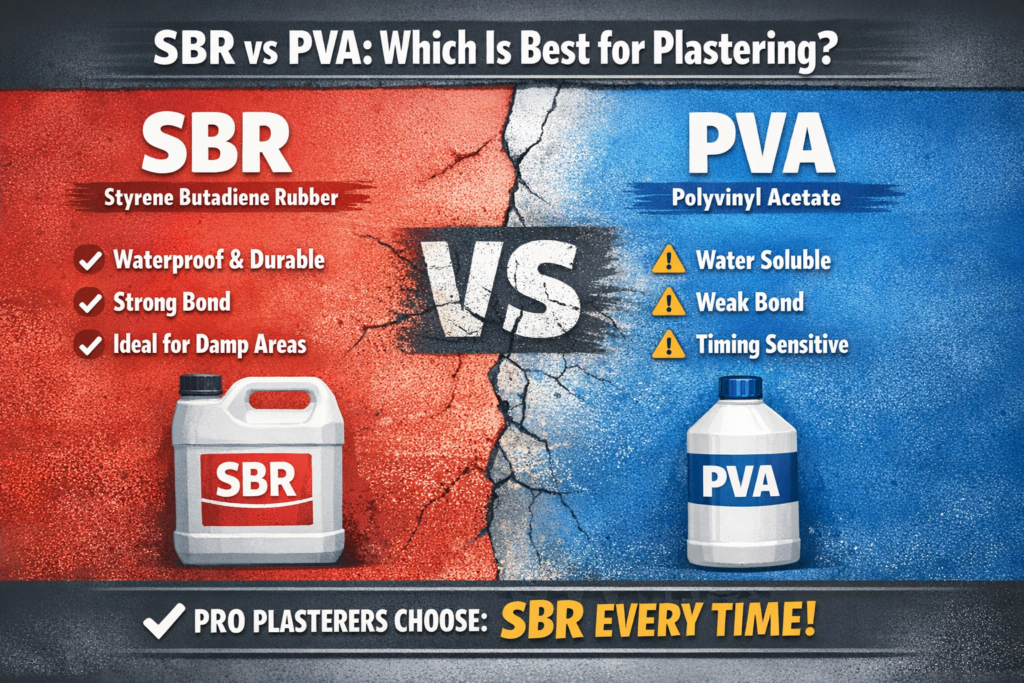
PVA is water-soluble.
That means:
- When fresh plaster hits it, it can re-emulsify
- Bond strength depends heavily on timing
- In damp or coastal environments (like Bournemouth), failures are more common
If the PVA dries fully, plaster won’t bond properly.
If it’s too wet, suction control is poor.
It works—but it’s unforgiving.
What Is SBR?
SBR (Styrene Butadiene Rubber) is a latex-based bonding agent designed for professional construction work.
This isn’t just a sealer. It’s a mechanical bonding system.
What SBR Does Better
- Creates a strong, waterproof bond
- Controls suction without re-emulsifying
- Can dry fully and still accept plaster
- Performs consistently in damp conditions
That last point matters a lot on the South Coast.
Typical Uses for SBR
In my day-to-day work, SBR is my go-to for:
- Plastering over concrete
- Bonding to render
- Floors, screeds, and wet areas
- External or damp-prone walls
- High-end or high-risk jobs
You apply it, let it dry, and plaster when ready. No rushing. No guessing.
SBR vs PVA: Side-by-Side Comparison
| Feature | PVA | SBR |
|---|---|---|
| Water resistance | ❌ No | ✅ Yes |
| Can plaster when dry | ❌ No | ✅ Yes |
| Bond strength | Moderate | High |
| Timing sensitive | Very | Minimal |
| Damp tolerance | Poor | Excellent |
| Cost | Cheap | More expensive |
| Professional use | Declining | Increasing |
Which Do Plasterers Prefer?
Here’s the honest answer from someone actually on the tools:
Older-school plasterers
Still use PVA out of habit.
It’s what they were taught. It’s cheap. It works if done right.
Modern professionals
Prefer SBR, especially on:
- New builds
- Commercial work
- Coastal properties
- Anything that can’t fail
Personally?
I only use PVA on low-risk internal walls.
Everything else gets SBR.
Why Bournemouth Plasterers Lean Toward SBR
Let’s talk local reality.
Bournemouth homes deal with:
- Higher humidity
- Salt in the air
- Older masonry
- Mixed substrates
That’s a recipe for bond failure if prep isn’t bulletproof.
SBR gives:
- Consistent results
- Better long-term durability
- Fewer callbacks
And fewer callbacks = better margins.
Common Mistakes I See
- Using PVA on concrete
→ Plaster eventually debonds - Letting PVA dry fully
→ No key, weak bond - Skipping bonding agents altogether
→ Fast suction, cracked plaster - Diluting SBR too much
→ Weakens its benefits
Prep is invisible—but failure isn’t.
Final Verdict SBR or PVA?
If you want the short version:
- PVA: Cheap, traditional, fine for basic work if timed perfectly
- SBR: Professional-grade, forgiving, stronger, and more reliable
If you’re a DIYer, PVA might get you through.
If you’re a plasterer who cares about finish, longevity, and reputation?
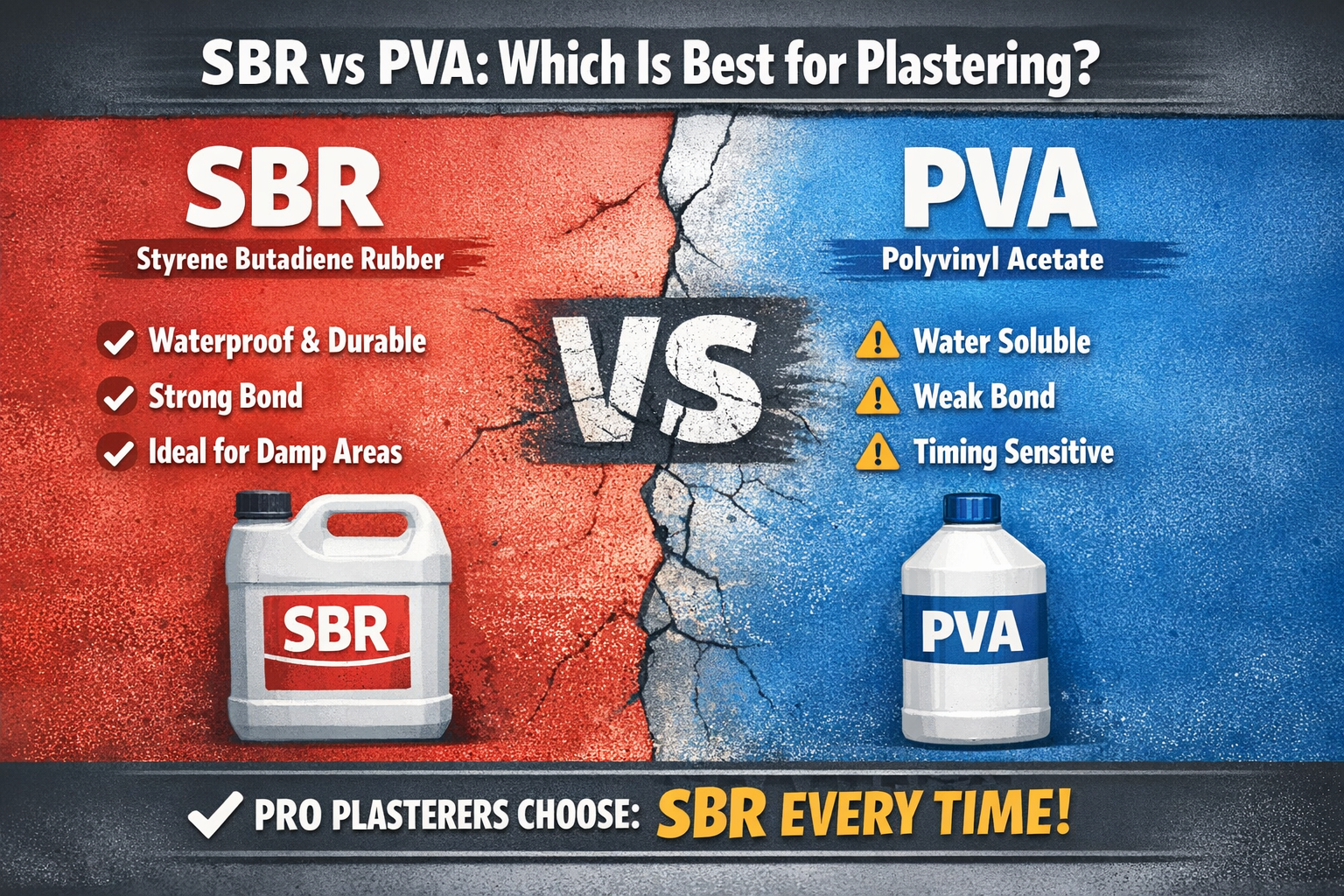
SBR wins. Every time.
One Last Tip From the Tools
Plastering isn’t about shortcuts—it’s about control.
Control the suction.
Control the bond.
Control the outcome.
That’s why, in 2025, most serious plasterers are moving away from PVA and toward SBR.